

In its second year as the permanent host of the competition that recognizes the best data journalism from around the world, the Global Investigative Journalism Network is proud to announce the winners of the 2026 Sigma Awards.
Ten outstanding data-driven journalism projects, from as many countries, were chosen from among the 31 finalists — 26 individual projects and five portfolios — by a diverse Prize Committee of 17 judges. Overall, the competition featured 543 entries from 84 countries, in what the first-round jury declared to be a remarkable diversity of formats, including podcast investigations, long-form serialized reporting, interactive databases, explainer projects, and visually-driven efforts. This is partly the result of the fact that the competition continues to feature no subject or format categories at all, in order to remove constraints on potential entries and encourage reporters and editors to submit innovative data-driven projects in any format.
Honorees from the 2026 Sigma Awards will discuss their winning projects during a GIJN-hosted webinar. Stay tuned!
Topics tackled by this year’s winners ranged from environmental degradation in Europe and state-sponsored sabotage in the Baltic Sea to algorithmic failure in Peru, shell companies in Mexico, and supply chain harms in Nigeria.
“I was incredibly impressed by the quality of entries this year; it shows how much and how wide the practice of data journalism has spread globally, and how much that has powered important and groundbreaking coverage," says Gina Chua, convenor of the Prize Committee.
Data for all the entries are available on the Sigma Awards Github repository, which also include details of entries since 2020.
Please join us in celebrating the following Sigma Award winners for 2026.
Green to Grey: How Europe Is Squandering the Little Nature It Has Left — Arena for Journalism in Europe (The Netherlands) and NRK (Norway), with De Standaard (Belgium), Le Monde (France), Long Play (Finland), Die Zeit (Germany), Reporters United (Greece), Facta (Italy), Gazeta Wyborcza (Poland), Datadista (Spain), The Black Sea (Turkey), and The Guardian (UK)
This collaborative data project revealed that Europe is losing natural and fertile land to construction at a rate equivalent to 600 football fields every single day; a loss that is one-and-a-half times more than previously estimated. A team of 41 journalists and scientists from 11 countries also showed how this alarming loss of natural space impacts food and water security, climate resilience, and the well-being of local communities
In its citation, the Sigma Prize Committee wrote: “The project is an ambitious, technically sophisticated investigation that combines satellite imagery, large-scale geospatial datasets, and AI-assisted analysis to reveal patterns of environmental degradation across Europe. What’s more, the presentation is intuitive and married with strong storytelling and on-the-ground reporting. Sometimes it can be hard to see environmental impacts over time. This project made it easy.”
Inside Russia’s Shadow War in the Baltics — The Financial Times (UK)
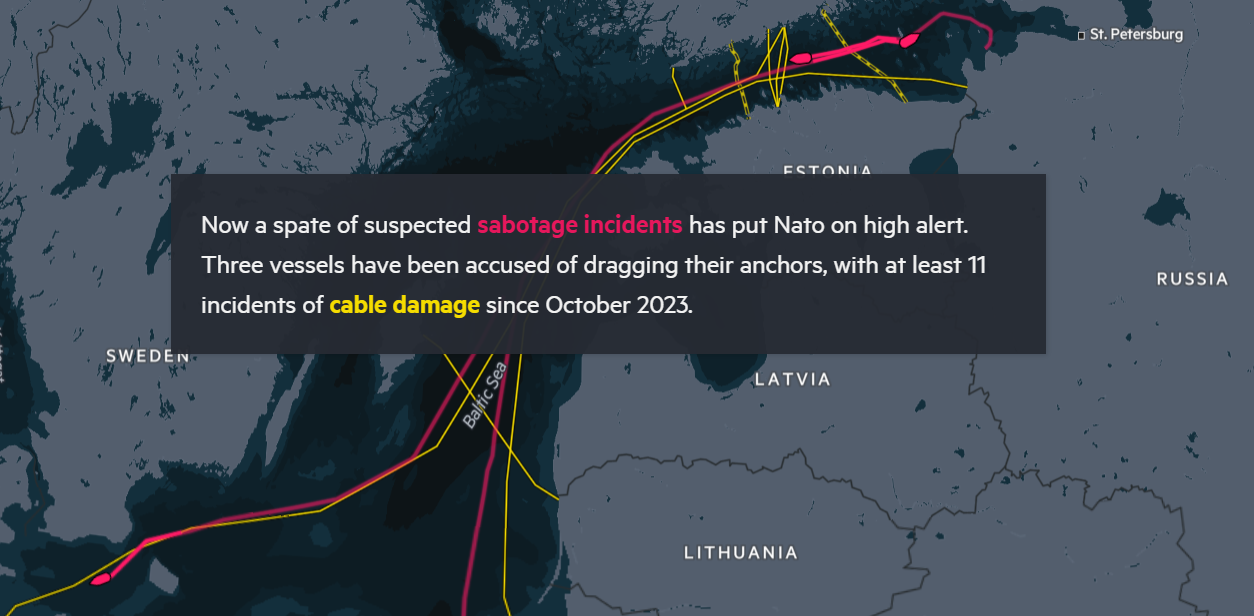
This beautifully rendered data project revealed the striking vulnerability of Europe’s maritime infrastructure in the Baltic Sea, where sabotage threatens gas pipelines, power lines, and data cables. The reporting team used analyses of ship-transponder and infrastructure data to focus on 11 incidents and three vessels suspected of damaging infrastructure by dragging their anchors. They also showed patterns of suspicious behavior by Russia’s “shadow fleet” of old tankers within the shallow, crowded maritime corridor of the Baltic Sea, as well as the startling security and economic threats posed to nearby NATO nations.
Judges wrote: “The topic is critical. The team did impressive work collecting and analyzing infrastructure and marine traffic data. The narrative and the visualizations clearly show the hidden sabotage Russia poses to European infrastructure in the Baltic Sea.”
Invisibles: How System Failures and an Algorithm Left Thousands of Older Adults Without a Pension — Salud con lupa (Peru)
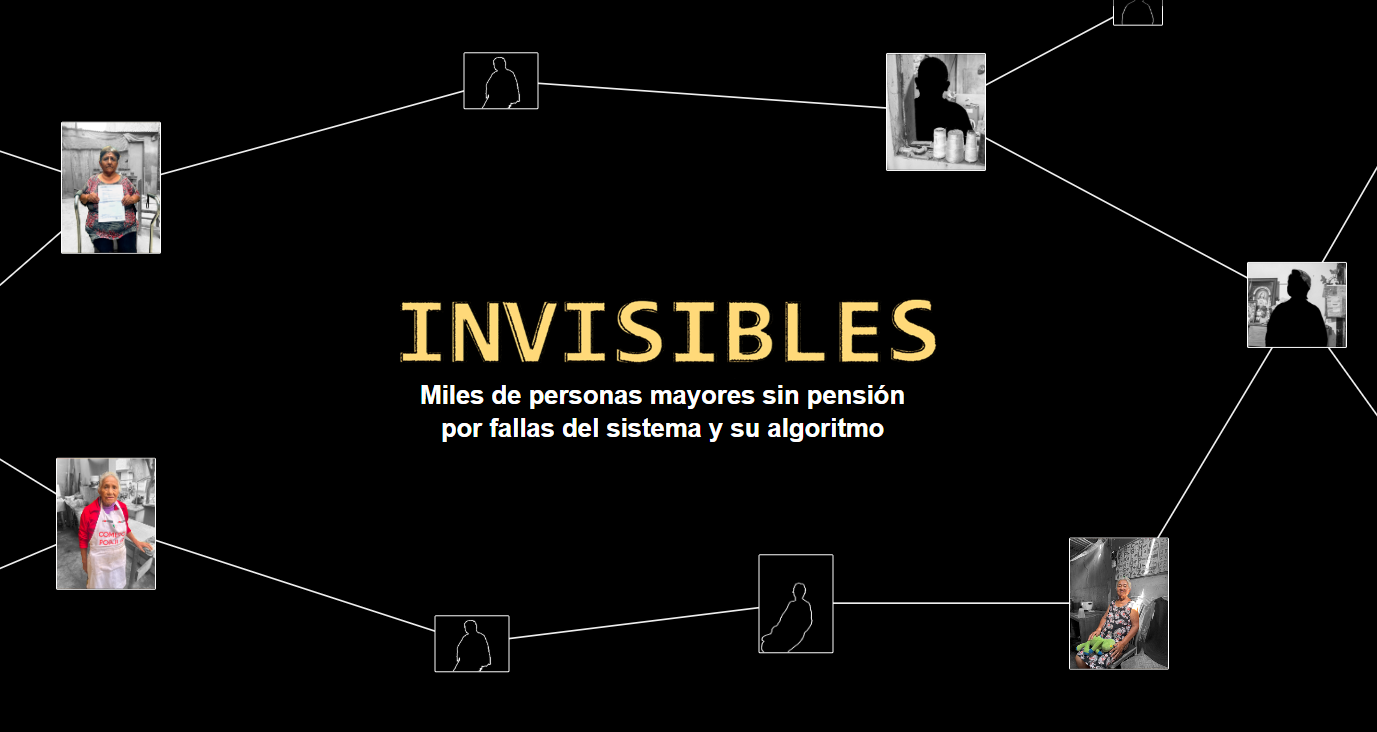
This multiplatform investigation revealed how Peru’s automated poverty classification system was unfairly excluding thousands of older adults from the country’s primary social protection program, based on a flawed algorithmic model. The series also included video testimonies, data visualizations, infographics, and public-service guides.
Judges wrote: “‘Invisibles’ stands out because it connects a complex system to its real-world consequences. Through careful data analysis, freedom-of-information requests, and on-the-ground reporting, the team demonstrates that these were not isolated errors but deep structural failures. Just as importantly, the reporting never loses sight of the people behind the numbers. The work also helped prompt a government reform allowing errors in the system to be reported — a reminder of what strong, persistent data journalism can achieve when it holds systems to account.”
The Human Trap: Sudanese Refugees Falling Prey to Organized Criminal Gangs on the Border with Egypt — Arab Reporters for Investigative Journalism (ARIJ) and Al-Muhajir (Sudan)
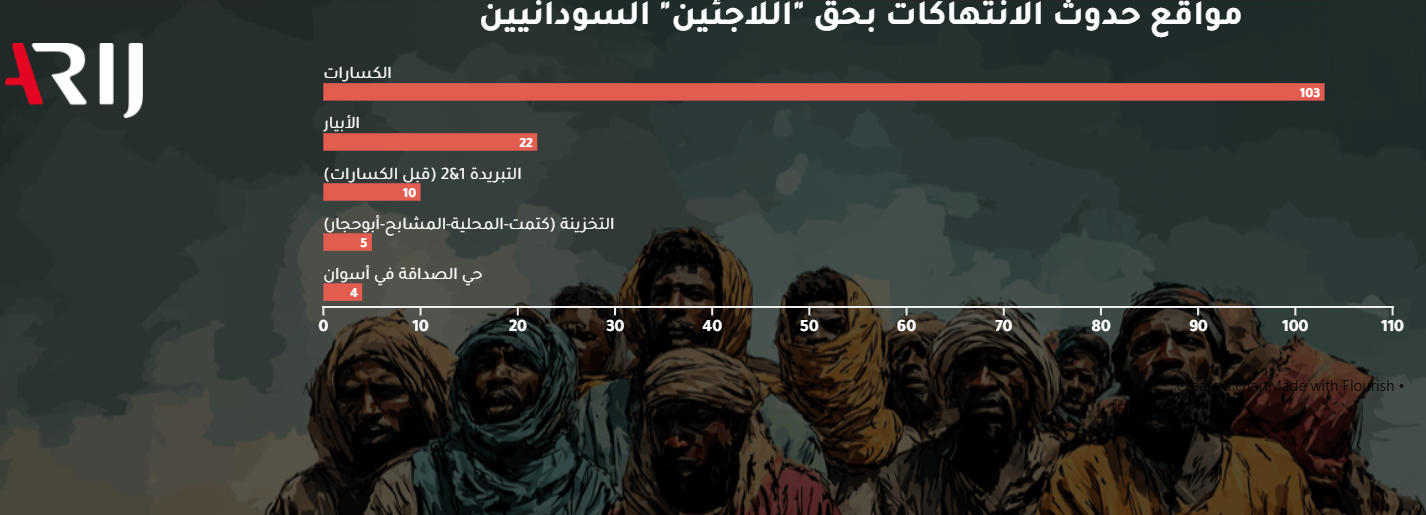
In a great example of courageous reporting on a sensitive topic in a perilous environment, this investigation revealed and detailed the criminal targeting of Sudanese refugees along the Sudan-Egypt border. The story showed how criminal gangs prey on vulnerable migrants in a route leading to the city of Aswan, exploiting their tenuous status with crimes ranging from theft to kidnapping and rape. The piece also drew on survey data and sensitively conducted interviews with seven sexual assault victims.
Judges noted: “By bypassing ‘data voids’ in high-risk environments, the journalists created a primary dataset of undercover interviews and digital footprints. This approach bridges the gap between individual testimonies and systemic patterns, transforming abstract borders into tangible, dangerous bottlenecks that reveal the true scale of human trafficking.
“The investigation’s strength lies in its meticulous breakdown of the ‘economy of misery,’ exposing how the desperation of Sudanese refugees is leveraged as a commodity. It provides granular evidence — from geospatial routes to transaction details — without ever compromising the safety of vulnerable sources. This masterclass in investigative courage and ethical data journalism sets a gold standard for balancing technical transparency with the absolute necessity of anonymity in conflict zones.”
Fantasmas del Erario: Cuatro Sexenios de Destinar Recursos Públicos a Empresas Inexistentes (Ghosts of the Treasury: Four Six-year Terms of Allocating Public Resources to Nonexistent Companies) — Quinto Elemento Lab (Mexico)
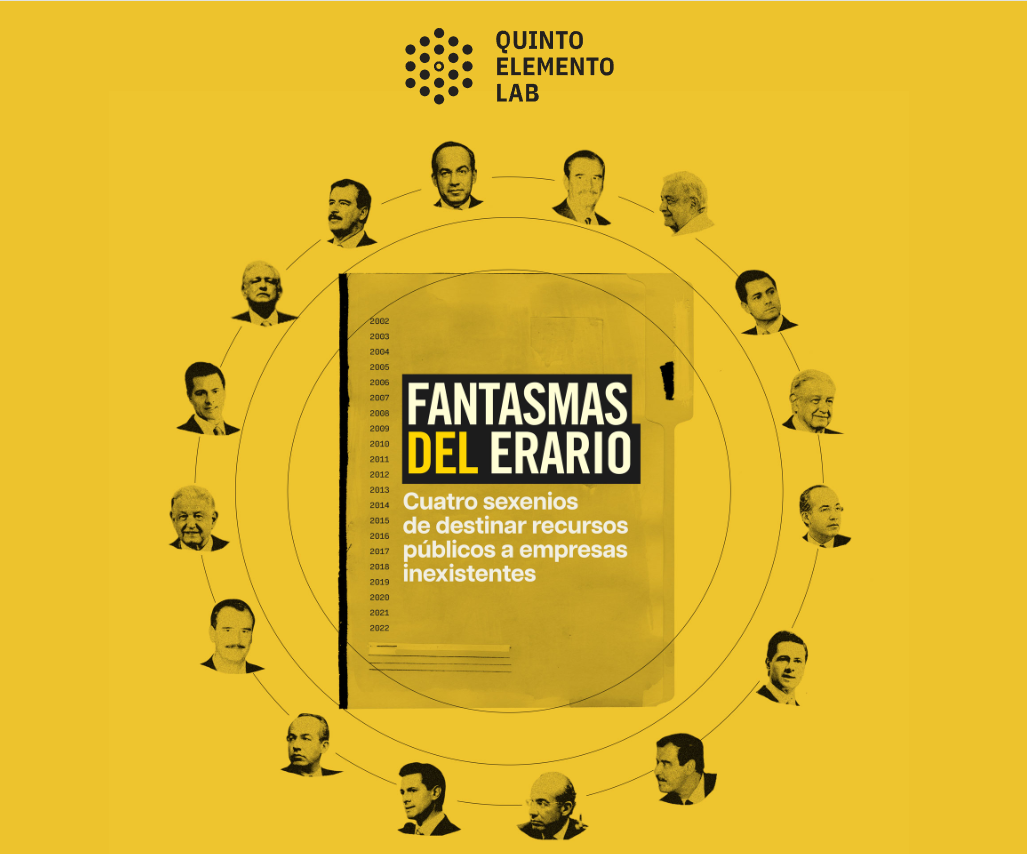
This 12-part series showed how 486 public institutions in Mexico — spanning nearly the entire government network — diverted public funds to a total of 834 shell companies. Using data analysis, public contracts, audits, fiscal records, and fieldwork, the reporting team tracked the equivalent of US$570 million diverted over two decades in violation of procurement laws.
The Prize Committee noted: “The data work in this series is meticulous: it combines thousands of information requests, the federal contract registry, and an official list of shell companies to build an original database validated both programmatically and manually. The result is a rigorous investigation into a hidden, multi-generational system of corruption — one that not only exposes the scheme but equips other journalists to pursue it further.”
Syria's Stolen Children — Lighthouse Reports (Greece), Women Who Won The War, Al-Jumhuriya (Syria), BBC Eye (UK), The Observer (UK), Trouw (Netherlands), Der Spiegel (Germany), Sowt, and SIRAJ (Syria)
This investigation revealed a heinous extortion system run under the former rule of Bashar al-Assad: how Syrian intelligence agencies secretly hid hundreds of detainees’ children in orphanages to pressure and intimidate their families. In a nine-month-long project, Syrian and international journalists built a database that confirmed more than 300 names within a group likely to be much larger. It noted that families still search for at least 3,700 missing children. The series also included powerful human stories in multiple formats, including an Arabic podcast, documentary film, and longform features in English, Dutch, and German. The team analyzed data from both digital datasets and “unguarded paper archives” with the use of optical character recognition (OCR), which also revealed the complicity of child care institutions and the separation of children as a tool of repression.
Judges wrote: “What works here is how it brings scattered records and personal stories together into a clear pattern. It turns fragmented evidence into something solid, making a hidden system visible and giving real weight to what families went through.”
Cerrado — o Elo Sagrado das Águas do Brasil (Cerrado — Brazil’s Sacred Water Link) — Ambiental Media (Brazil)
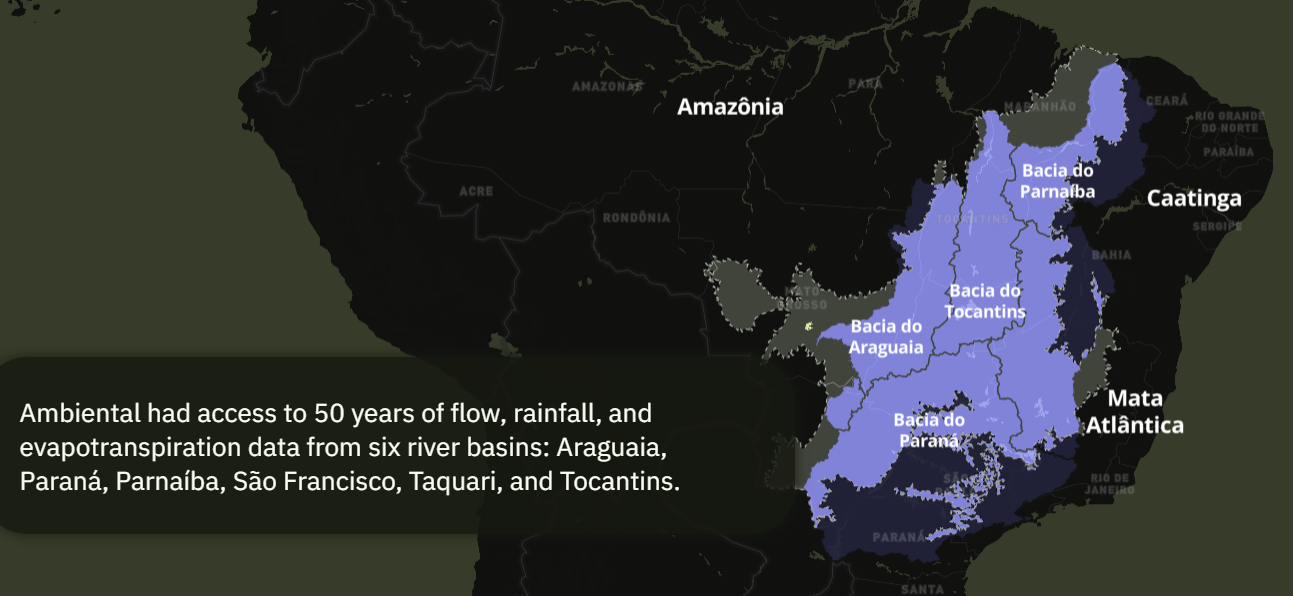
This formidable data story used accessible science and interactive visualizations to show how expanding agribusiness and monoculture are threatening water security in a critical Brazilian biome. Based on a systematic analysis of hydrological, climatic, and land-use data over time, the investigation revealed links between the loss of natural vegetation and compromised river flows that results in water loss equivalent to 31 Olympic-sized swimming pools each minute. The findings were covered by 70 national and dozens of regional outlets. The project combines traditional reporting with maps and interactive dashboards to make the plight of this two-million-square-kilometer region clear on every scale.
Judges wrote: “This investigation is a masterclass in translating intricate data on river flows and land use into a coherent narrative, shining a necessary light on a biome critical to global water security. Its strength lies in exceptional scientific translation, utilizing high-quality visualizations to make abstract underground water flows tangible and engaging for a general audience.
“Beyond its educational value, the project’s technical execution allows readers to become active researchers through interactive dashboards and rigorous correlation analysis. Ultimately, this project achieves a rare balance between sophisticated aesthetics and deep reporting, proving that masterful data application can make underreported crises both emotionally resonant and indisputable.”
The Silent Victims of War: How Russia is Robbing Ukrainian Children of Their Identity — Neue Zürcher Zeitung (Switzerland); Texty.org.ua (Ukraine)
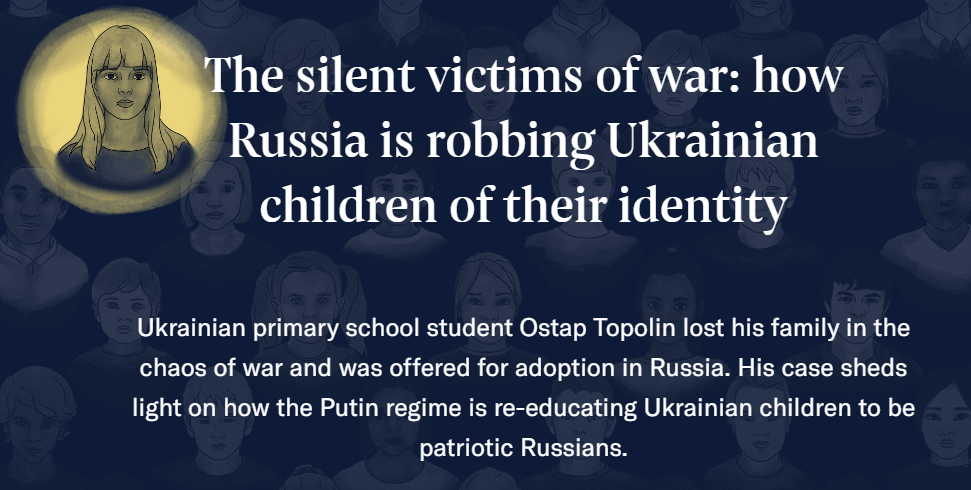
In a project combining both advanced technological and ethical standards, this daring investigation revealed exactly how Ukrainian children caught up in Russia’s “voluntary relocation” programs end up forced into adoption in Russia. The collaborative project focused on the trajectory of a single child, and began with a single photograph: a Ukrainian boy in a shirt embroidered in the colors of the Ukrainian flag, listed in a database of missing children. NZZ and Texty.org.ua found him on a Russian adoption platform months later, and — because on-the-ground reporting in Russia is not feasible — then traced each step of his journey remotely using facial recognition, documents, satellite imagery, AI, and social media. Notably, the project also featured careful ethical considerations, including limiting identifying details of the child, discrete alterations to illustrations of original photographs, and full explanations of the methodology offered to readers.
Judges wrote: “This is a great example of OSINT done right. The complex ethical implications of tracking children across borders through an AI-powered facial recognition system held the journalists at nzz.ch and texty.org.ua to a very high standard and they managed to pull it off. Their methodology and strategies are replicable and this makes their investigation an outstanding piece of data journalism.”
The Poisonous Lead Trade — The Examination and The New York Times (United States)
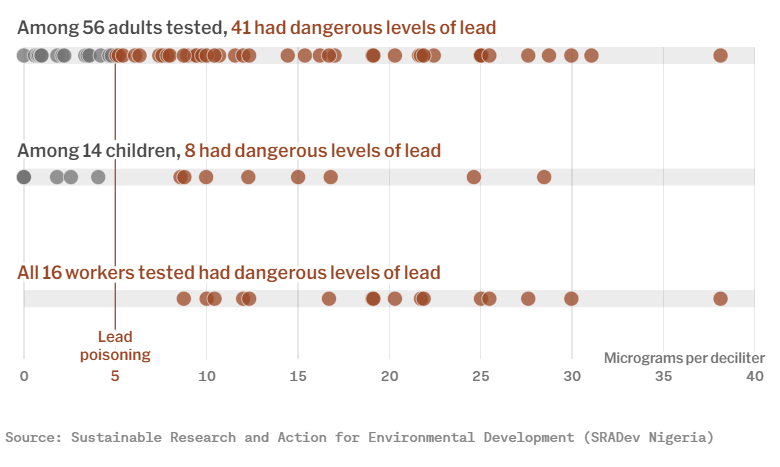
In a highly impactful data project that could be replicated in other countries, The Examination found that demand from Western auto supply chains has fueled lethal lead poisoning in Ogijo, Nigeria – home to more lead recycling factories than anywhere else in Africa. The project also included powerful narrative storytelling, graphics, and photography.
The team used trade records to trace lead from unsafe battery recycling factories in Nigeria to a major US battery maker that supplies car manufacturers. It also commissioned a nonprofit research organization in Nigeria to conduct the country’s most comprehensive study of lead poisoning and lead contamination, involving 70 people and about 50 soil samples. The resulting data showed lead contamination up to 186 times beyond safe levels, as well as alarming evidence of poisoning among factory workers and others in the community. The investigation triggered significant impacts, including the closure of seven factories; a local cleanup initiative; and plans for free blood tests in an adjacent town.
Judges wrote: “This deeply reported investigation shows the toxic effects of unsafe lead battery recycling on a community near Lagos. The judges were impressed by the care taken to consult the community to obtain informed consent in the data collection process. The lead was traced to battery manufacturers in the United States, which has been importing increasing quantities of recycled lead from Nigeria.”
How Iran Moves Sanctioned Oil Around the World — Reuters (Singapore)
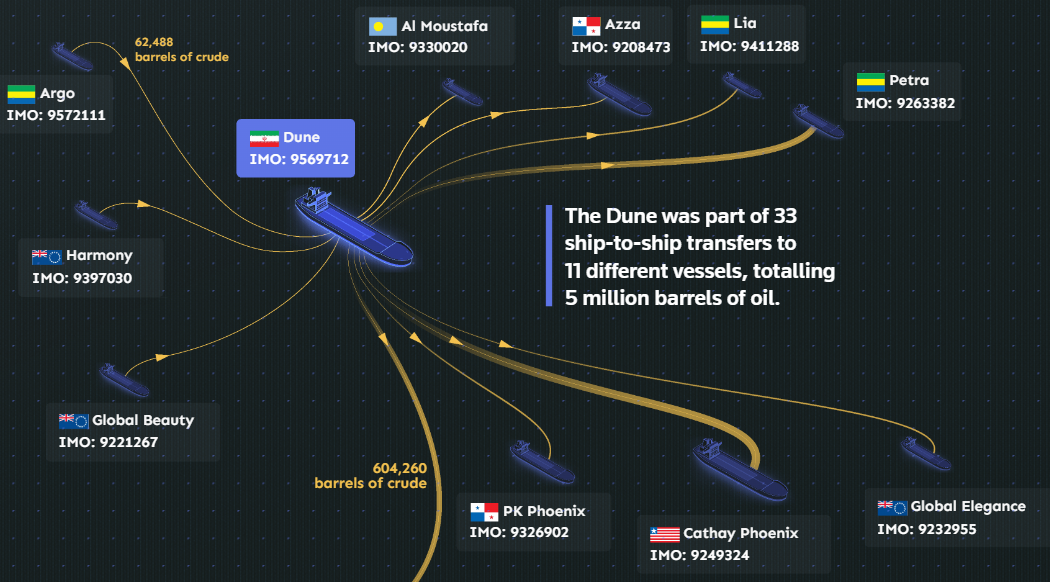
In a project that also helps illustrate the dynamics of the current conflict in the Gulf region, this visually striking investigation revealed how Iran circumvented some of the West’s toughest sanctions to conduct a roaring oil trade with willing buyers across Asia. Using leaked emails, satellite imagery, trade data, and open source tools, the team at Reuters showed how the Iranian authorities used a shadow fleet of tankers, falsified shipping records, and elaborate evasion techniques to fuel illicit sales with geopolitical impacts. Sigma judges were impressed by the depth of the reporting, the diversity of expert sources, and the excellence of its interactive graphics.
Judges wrote: “In this timely project, the analysis begins with leaked shipping documents and then uses satellite imagery, corporate records, and shipping data to expose how Iran avoids oil sanctions. The judges were especially impressed with the interactive visualizations.”

Rowan Philp is GIJN’s global reporter and impact editor. He was formerly chief reporter for South Africa’s Sunday Times. As a foreign correspondent, he has reported on news, politics, corruption, and conflict from more than two dozen countries around the world.


